

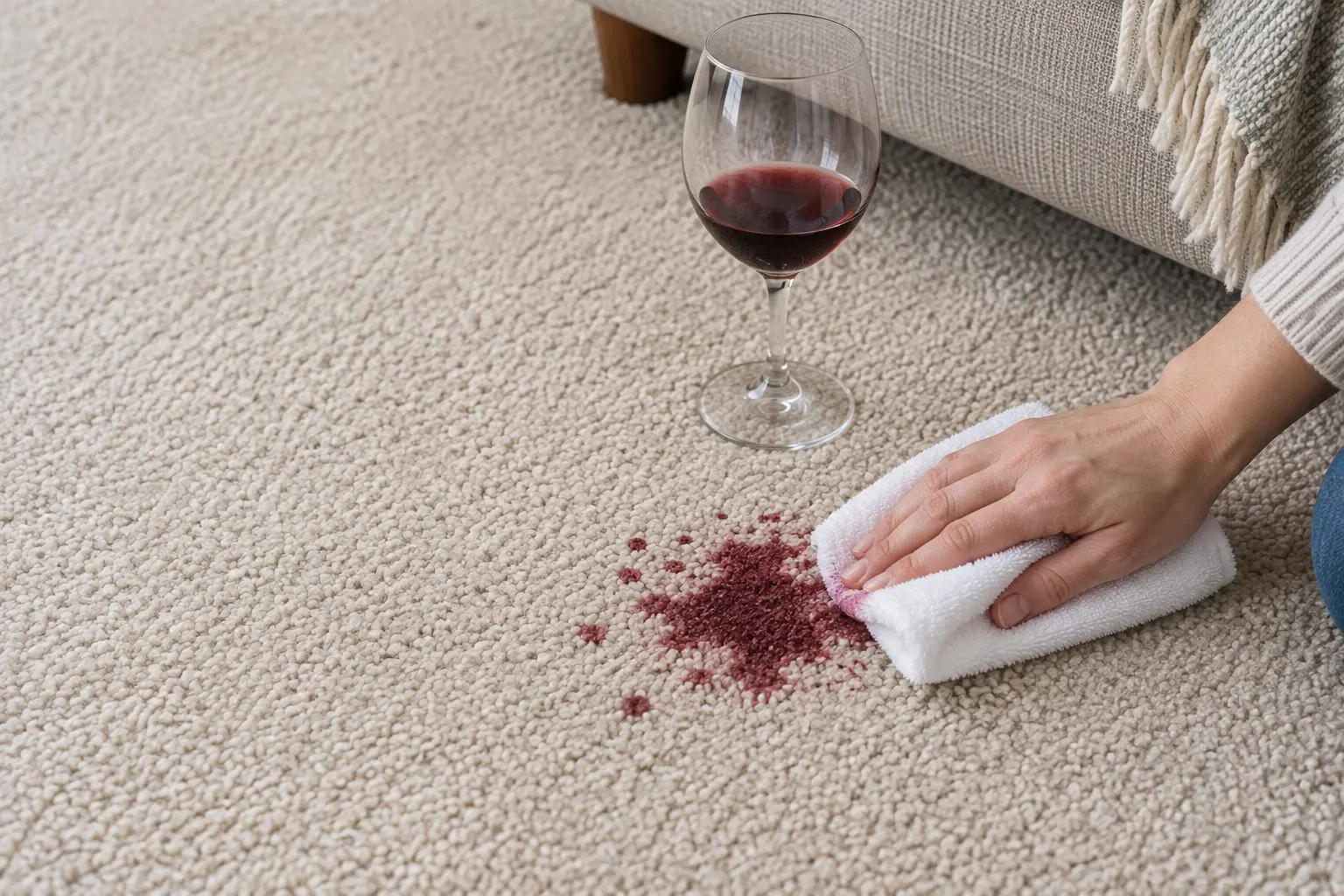
Red Wine on Carpet: The First 15 Minutes
What to blot, what to check, and when to put the cleaner down.
Blog / Stain care
By Carpet Missoula Pros | Updated September 18, 2026
A glass tips over during dinner and leaves a red patch on the living-room carpet. Start with a clean white towel. Whether you’re in a Missoula apartment or a house out in the Bitterroot, the first decision is the same: absorb the wine before reaching for another liquid. This guide covers the first response, not a promise that every wine stain will come out.
Quick answer: Blot fresh wine with a dry white cloth, working from the edge toward the middle. Keep switching to clean sections of the cloth. Don’t scrub or soak the area. Before using water or a spot remover, check the carpet’s care instructions and test the approved method in a hidden area. Stop if carpet dye transfers or the texture changes.
On this page
What should you do in the first 15 minutes?
Think of the first 15 minutes as a calm order of work, not a chemical deadline. A stain does not automatically become permanent when a timer runs out. Don’t skip a fiber check or rush a product test just to finish within this window.
Start by containing the spill
- Move the glass and any loose pieces out of the way. Keep children and pets away while you check for broken glass.
- Bring several clean white cloths or unprinted paper towels to the spot. Keep a bag nearby for wet towels so you don’t trail wine through the room.
- Press a dry towel onto the wet area, lift it, and use a clean section. Work inward without dragging the towel across unaffected carpet.
- Keep blotting while wine transfers. Pause before adding a product if you’re unsure what carpet you have.
The Carpet and Rug Institute’s spill guidance supports absorbing liquids with white material, avoiding scrubbing and testing a cleaner before use.
Check the care information before treating
Look for a leftover carpet sample, installation invoice or manufacturer’s care sheet. If you rent, ask the property manager for the product name. For a loose rug, read its label without dragging the wet part across the floor. A beige color or soft feel won’t reliably tell you which fiber is underneath your hand.
While someone checks the care information, you can keep absorbing surface liquid. Don’t turn that wait into an experiment with several different household cleaners.
Can you use water or dish soap on the wine spot?
Only use a treatment your carpet’s care instructions allow. For a water-compatible carpet, a small amount of cool water on a white cloth can be a cautious next step after blotting. Work with a damp cloth rather than pouring water into the pile. Use dry towels afterward to recover moisture.
CRI’s wine spot guidance describes a dilute clear dishwashing-detergent option. That is not a universal recipe for every carpet. WoolSafe’s fine-fiber guidance advises against washing-up liquid because residues can encourage resoiling. If your carpet is wool, a blend or unidentified, use its own approved care method instead.
For a carpet-approved spot cleaner, read the dose, application and removal directions. Try it on a spare piece or concealed area and let the test dry before assessing color and feel. If you can’t complete that check yet, continue with dry absorption and get advice rather than treating the visible patch.
Don’t substitute laundry detergent, dishwasher detergent or a stronger soap mixture. More foam does not tell you that more wine has been removed.
Which common wine-spill fixes should you avoid?
| Tempting shortcut | Better decision |
|---|---|
| Scrub until the red fades | Blot and lift. Keep the pile from becoming a rubbed, fuzzy patch. |
| Pour several remedies on top of one another | Choose one approved method and follow its removal directions. |
| Try bleach, peroxide or an online chemical mix | Do not improvise bleaching chemistry on a colored textile. |
| Flood the area to dilute the wine | Control moisture with a cloth; avoid wetting the backing. |
| Use an iron or strong heat to hurry things along | Leave heat treatment out of the first response. |
You don’t need to decide whether every internet remedy works in some situation. You need a method that is allowed on the carpet in front of you. Salt, white wine and homemade pastes add extra material to deal with; they aren’t necessary steps in this first-response plan.
If you already applied something, keep its bottle and write down roughly how much you used. Don’t add another cleaner to correct it without checking compatibility.
Does wool or an unknown fiber change the next step?
Yes. The fiber and construction help determine which product is suitable. Start with absorption on all of them, then check the specific care instructions. For wool, choose a product explicitly suitable for wool and verify any approval mark. For silk, viscose, sisal, jute or an unidentified rug, seek material-specific advice before wet treatment.
A stain-resistant label also isn’t permission to use any chemical. It describes a property of the carpet, not unlimited resistance to cleaners. Stop if the hidden test produces color transfer, roughness or a visible ring.
If you’re choosing a spray or foam, use our cleaner compatibility checklist before bringing it to the stain.
What should you check after the patch dries?
Keep foot traffic off the treated area while it dries. Follow the carpet and product instructions for drying and ventilation; don’t rely on a fixed time from another household. Check in normal daylight once it is dry, rather than judging the result while the fibers are still damp.
- Compare the edge of the spot with the surrounding carpet.
- Check whether the area feels tacky or different from the rest of the pile.
- Note whether color remains, the patch has spread, or a mark has returned.
- Take a photo and keep a note of the treatment instead of starting another round automatically.
A remaining red mark and a roughened pile are different problems. More liquid won’t necessarily solve either. In a rental, keep your before-and-after photos and product details so you can explain exactly what happened; this is practical documentation, not a guarantee about a deposit.
For planning a broader clean around a move, see the separate Missoula rental-season guide.
When is it time to ask for professional stain treatment?
Ask for help if the spill was large, reached a seam, soaked below the surface, is on a delicate material, or no longer improves with the approved method. Also stop when the carpet’s own color transfers, the texture changes or a previous cleaner is unknown. Those details matter more than the number of minutes you’ve spent trying.
When you contact a cleaner, give the approximate size, time of spill, fiber if known, and names of any products already applied. A close photo plus one wider photo of the room is more useful than saying only that the carpet has a red stain.
Our carpet stain treatment page explains the service options. Some old stains improve without disappearing completely; assessment should come before any promise of full removal.
Frequently asked questions
Is red wine permanent after 15 minutes?
There is no universal 15-minute cutoff. Prompt action helps, but the result also depends on the carpet, the size of the spill and previous treatment. Continue with the correct method rather than rushing into a stronger one.
Should I treat a dried wine stain the same way?
A dry mark needs a different assessment from fresh liquid. Don’t scrape or scrub it as if it were loose dirt. Check the carpet’s approved spot instructions and ask for advice if the stain is old or the fiber is unknown.
What if I already rubbed the carpet?
Stop rubbing, absorb remaining moisture and record what you used. Once dry, compare the pile texture as well as the color. Tell the cleaner about the rubbing so a texture change isn’t mistaken for remaining wine.
Sources and further reading
Use the care instructions for your exact carpet and the label on your exact cleaning product. A general guide cannot confirm a carpet’s fiber, backing, dye stability or previous treatments.
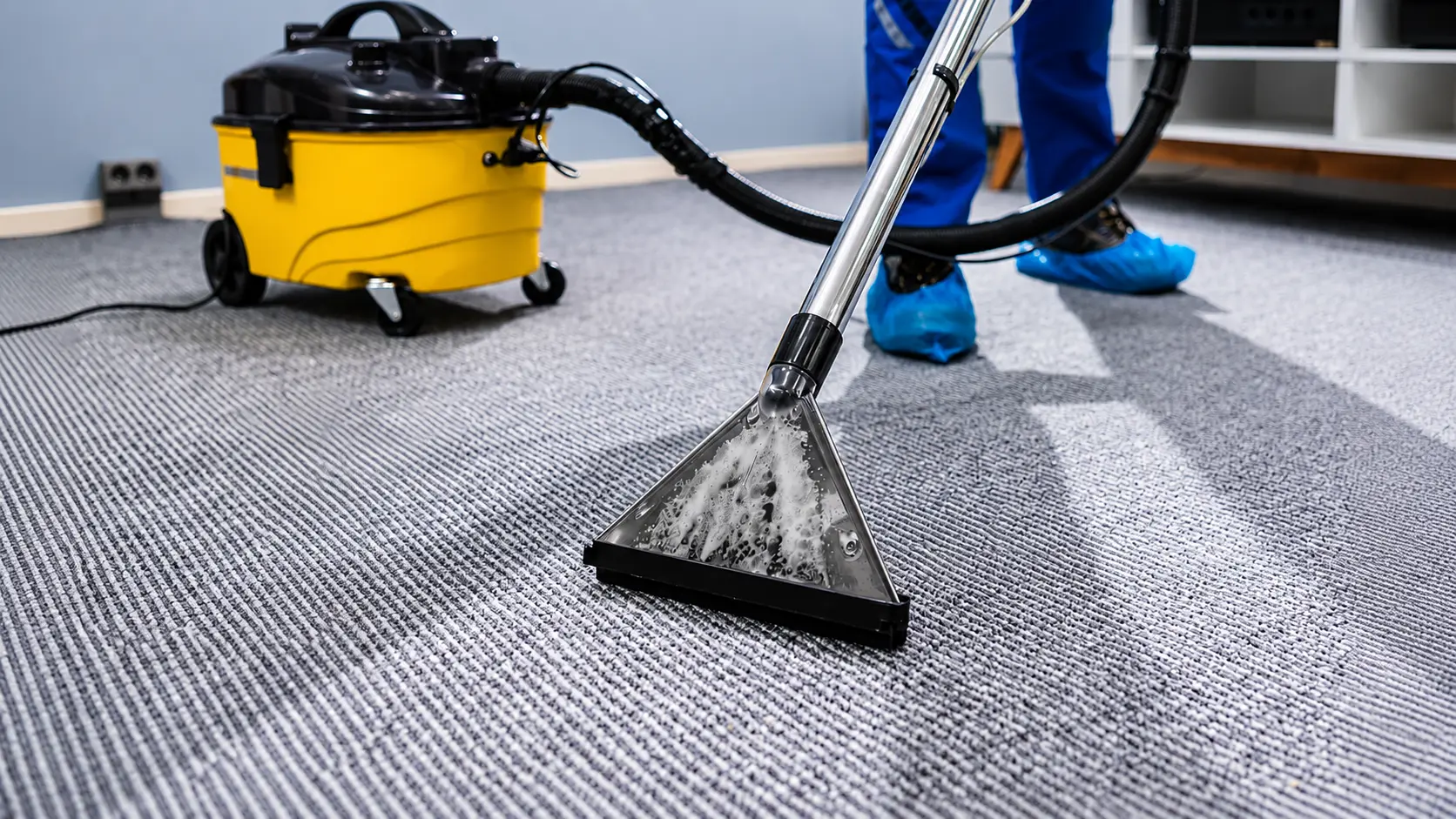
Need help with a stubborn spot?
Tell us what spilled, when it happened and what you have already tried. That gives us a useful starting point.