
Missoula’s Hard Water: What It Means for Your Home
Missoula’s water supply is widely reported as hard water. Here’s a broad look at what that mineral content means around the house, not just in one room.
What “Hard Water” Actually Means
Hard water carries higher levels of dissolved minerals, mainly calcium and magnesium, picked up as it moves through rock and soil before reaching the tap. Missoula draws largely from the aquifer beneath the valley, and like much of western Montana, the water here is generally on the harder end of the scale. It’s completely safe to drink and use, but that mineral content shows up in small ways across the whole house over time.
Where Missoula Homeowners Usually Notice It First
- Spots and streaks on glass shower doors, faucets, and stainless steel appliances
- A white, crusty buildup around faucet aerators and showerheads
- Coffee makers and kettles needing more frequent descaling than they would elsewhere
- Soap and shampoo that seem to lather less than expected
- A dull, cloudy haze in tile grout lines, especially in bathrooms and entryways
Appliances That Feel It Most
Water heaters, dishwashers, and washing machines all work a little harder in hard-water areas, since mineral scale can build up inside them over years and reduce efficiency. Many Missoula homeowners find that appliances need descaling or maintenance somewhat more often than manufacturer guides written for average water conditions suggest.
The Carpet Connection, Briefly
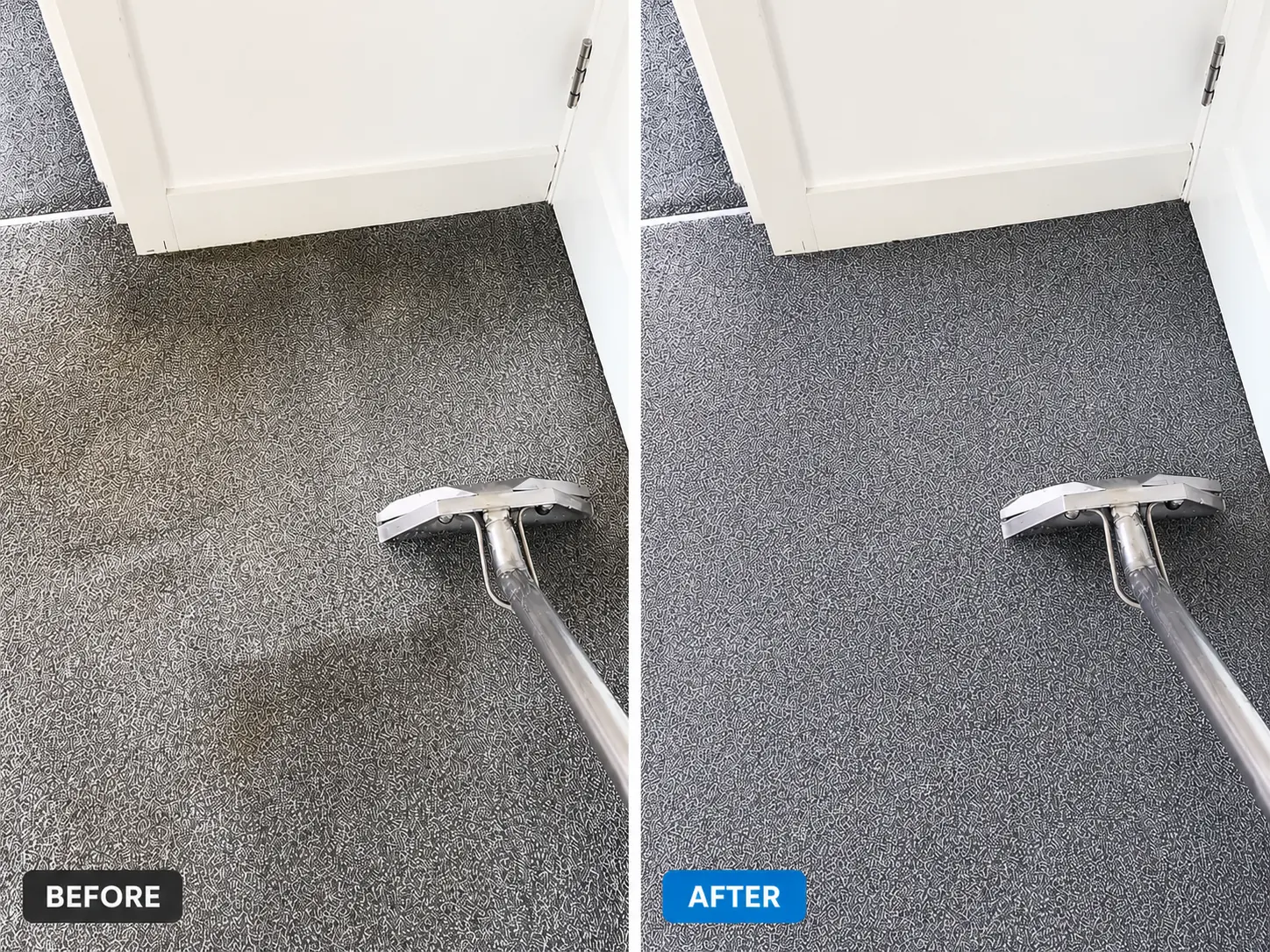
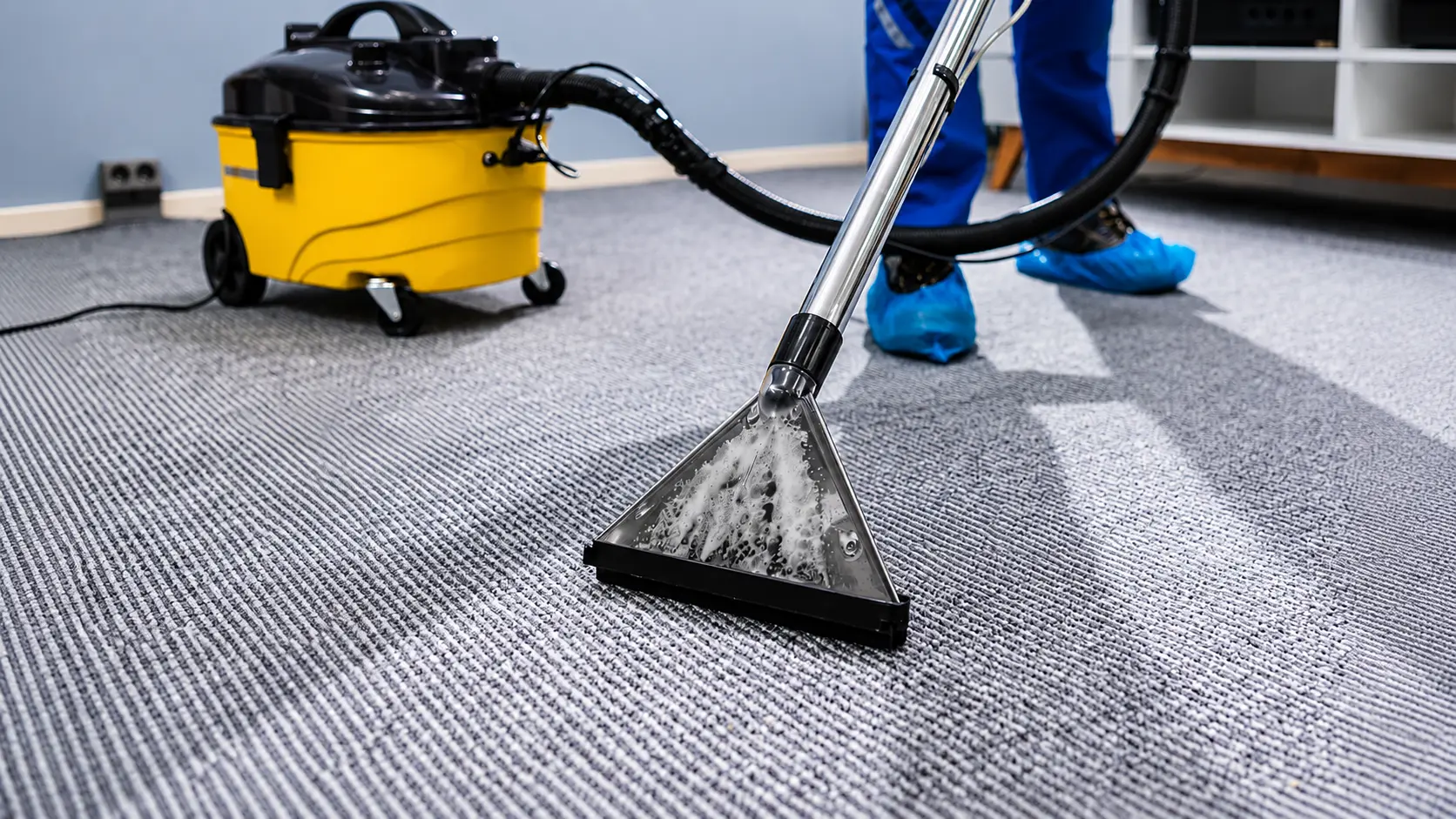
Carpet feels the effect too, mostly when it’s cleaned without a proper rinse step. A DIY job that leaves cleaning solution behind, combined with mineral-heavy water, can leave a residue that actually attracts dirt faster afterward. It’s a minor factor compared to grout, but part of why professional extraction always includes a thorough rinse.
Where Hard Water Shows Up Most: Tile Grout
Of everything hard water touches in a home, grout usually shows it fastest and most visibly. Grout is porous cement, and every time water sits on a tile floor or shower, dissolved minerals settle into its pores, building into the dull haze that a regular mop can’t lift. This is common enough in Missoula that we’ve written a full breakdown of it, including cleaning and sealing options, on our Tile & Grout Cleaning page.
Should You Soften Your Water?
Some Missoula homeowners install a water softener specifically to cut down on mineral buildup in showers, appliances, and fixtures. That’s a household decision separate from professional cleaning, but worth looking into if hard water is a recurring frustration, alongside regular cleaning that handles what’s already accumulated.
Frequently Asked Questions
Is Missoula water actually classified as hard?
It’s widely reported as hard water in the moderate to high range, common across much of western Montana due to local groundwater mineral content.
Does hard water affect more than just my shower and sink?
Yes. It shows up in appliances like water heaters and dishwashers, and even in how well carpet stays clean after a DIY wash.
Is a water softener worth it in Missoula?
It’s a household decision, but many homeowners here find it reduces the frequency of scale buildup on fixtures and appliances.
Where does hard water show up worst in a Missoula home?
Grout is usually the most visible spot, since it’s porous and holds onto mineral deposits over time. See our Tile & Grout Cleaning page for that specific issue.