

Motor Oil on Carpet: Safe First Steps
Contain the track, lift surface oil and avoid turning one spot into a trail.
Blog / Stain care
By Carpet Missoula Pros | Updated September 18, 2026
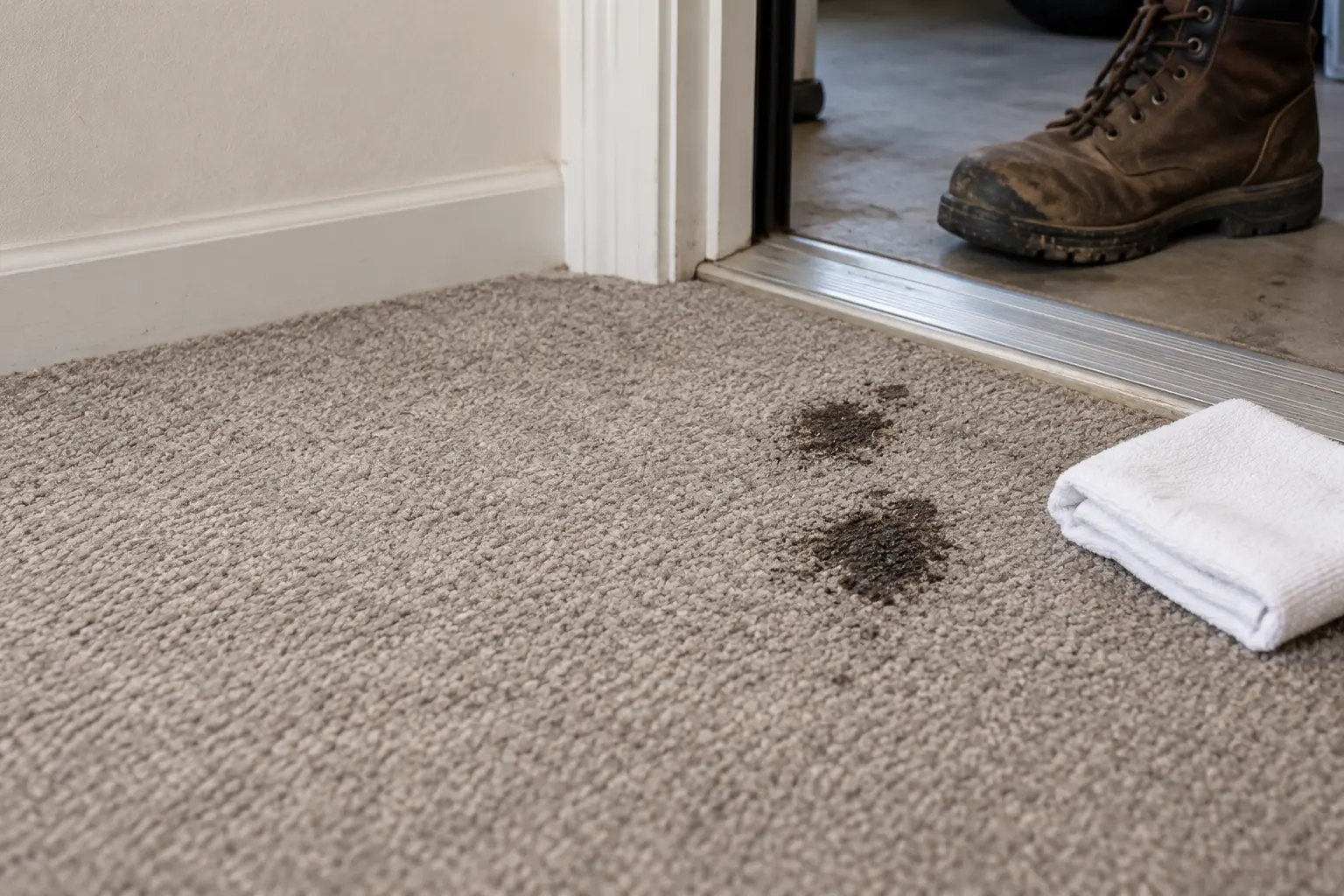
A boot comes in from the garage and leaves a dark mark by the door. Before treating it as mud, check what was on the boot. Motor oil on carpet calls for a different next step from ordinary tracked-in soil. This guide is for a small household spot or oily footprint, not a large spill, unknown garage chemical or vehicle-interior cleanup.
Quick answer: Keep people and pets off the track, remove the source and blot surface oil with white absorbent towels. Don’t scrub, flood the carpet or reach for garage degreaser. Check the carpet’s care instructions before using a spot product. A soaked area, strong petroleum odor, unidentified liquid or oil below the pile needs professional assessment.
On this page
- What should you do as soon as you spot motor oil?
- Why doesn’t water alone solve an oily footprint?
- Which cleaners and shortcuts should you leave out?
- How do you decide whether a carpet spot product is suitable?
- What should you do if a mark returns after cleaning?
- How can you prevent a second trail through a Missoula home?
- When should you call a professional about motor oil?
What should you do as soon as you spot motor oil?
Start at the doorway, not halfway across the room. If the oil came in on footwear, remove the shoes on a hard surface and check the path already walked. Keep the oily shoes and cleaning cloths away from clean carpet.
- Block the route with a chair or another obvious barrier so nobody follows the same path.
- Photograph the marks before treatment. Include a wider view showing the trail.
- If there is a raised blob, gently lift it with a rounded spoon without scraping the fibers.
- Press clean white towels onto the surface and lift them away. Change to a clean area of towel as oil transfers.
- Read the carpet care information before adding any liquid. If the substance might be fuel or another chemical, stop treating it as an ordinary carpet spot.
CRI’s grease spot guidance distinguishes absorbing liquid from lifting semisolid material and emphasizes hidden-area testing. The useful first goal here is removal of loose material without spreading it.
Wear suitable gloves when handling used oil or contaminated towels and follow the oil product’s handling instructions. Don’t leave those towels where a child or pet can reach them.
Why doesn’t water alone solve an oily footprint?
An oily mark is different from a water-based drink spill. It may include oil plus dark material carried on the shoe. A wet cloth may lift some loose dirt without removing the oily material, so the patch can still feel greasy afterward. Don’t interpret a lighter color as proof that everything has gone.
Shaw’s oil and grease cleaning method uses a controlled solvent-and-detergent sequence for applicable carpet. It specifically warns against applying solvent straight to the carpet because the backing can be damaged. That is a reason to confirm the method, not an invitation to pour a household solvent on the floor.
Think about two separate questions: what is left on the fibers, and how far did the liquid travel? A single surface footprint may be suitable for an approved spot method. A puddle near a seam or an area that stays greasy after blotting is outside the limited first-response advice here.
Which cleaners and shortcuts should you leave out?
| Avoid this shortcut | Why the choice matters |
|---|---|
| Gasoline, brake cleaner or garage degreaser | A product made for automotive parts is not automatically suitable for indoor carpet. |
| Pouring solvent onto the mark | Solvent reaching the backing can damage its adhesive layers. |
| Scrubbing with a stiff brush | Friction can spread the mark and change the pile texture. |
| Running a household vacuum over wet oil | A dry vacuum is not a tool for recovering an oily liquid. |
| Repeatedly soaking the area | It becomes harder to tell where the oil and treatment have traveled. |
Don’t use a kitchen powder or cat litter simply because it absorbs spills on a garage floor. This plan does not require either. Powders create another material to recover from the pile, and the cleanup must still follow your carpet and vacuum instructions.
Likewise, don’t mix cleaners. If someone has already used a product, photograph its label. A cleaner needs that history before choosing another treatment.
How do you decide whether a carpet spot product is suitable?
Match three things: the carpet’s fiber and construction, the type of spill, and the exact product directions. A label that says carpet cleaner may describe general soil removal rather than oil spotting. Check both what it can be used on and what the manufacturer excludes.
- Find the carpet care sheet or ask your retailer or property manager.
- Confirm that the cleaner is intended for that carpet and an oily spot.
- Test on a spare sample or concealed section as directed, allowing it to dry before evaluating it.
- Follow the specified application and removal method. Do not increase the concentration.
- Stop if carpet color transfers, the texture changes or the spot stops improving.
If the directions conflict, don’t average them or improvise a compromise. Ask the carpet manufacturer which instructions govern that installation. On wool, a wool-suitable product still needs testing; an unknown natural-fiber rug deserves specialist advice.
Our carpet cleaner label checklist covers that decision in more detail. Foam volume alone doesn’t tell you whether a product is appropriate for motor oil.
What should you do if a mark returns after cleaning?
Let the area dry as directed, then assess it under normal light. If it feels oily or tacky, a visible improvement is not the whole story. Take a new photo and describe the change before applying more product.
A returning spot can have more than one explanation, including material left in the carpet or cleaner residue that attracts soil. You cannot confirm which happened from color alone. Note whether it returned during drying or developed later after people started walking over it again.
CRI describes residue and resoiling concerns in its grease-cleaning precautions. Continued soaking is not a substitute for finding out what remains.
For a rental, save the product names and notify the property manager if the spill went beyond a small surface mark. Don’t lift installed carpet or cut out padding on your own.
How can you prevent a second trail through a Missoula home?
Keep garage footwear on the garage side of the entry and use a washable mat where you change shoes. After vehicle or equipment work, inspect the soles before crossing onto carpet. These small habits matter whether your entry is a mudroom, a side door or a shared apartment hallway.
Check the source as well. If oil is still on the garage floor, the next person can bring it inside after you finish cleaning. Deal with that surface using its appropriate method, keeping garage cleanup products separate from your indoor carpet kit.
For ordinary wet soil, our Missoula mud-season guide covers the broader entryway routine. Mud and motor oil can arrive on the same boot, but they should not automatically get the same treatment.
When should you call a professional about motor oil?
Stop home treatment if oil covers more than a small isolated mark, has soaked into the backing, has reached several rooms, or involves a delicate or unidentified fiber. A strong odor or uncertainty about the spilled chemical is also a reason to seek advice before using more equipment.
Provide the oil type if known, whether it was fresh or used, approximate quantity, time since the spill and every cleaner already tried. Ask how the carpet and backing will be assessed and what the realistic limitations are.
See our professional stain-removal options for the next step. A cleaner should assess whether treatment is practical; full removal cannot be promised from a photo alone.
Frequently asked questions
Is every black footprint motor oil?
No. It may be soil, rubber transfer, grease or a mixture. Check the footwear and where it was worn. If the material is unknown, describe it that way rather than choosing a strong oil solvent on a guess.
Can I use my rented carpet-cleaning machine?
Check the machine, solution and carpet instructions first. Do not put garage chemicals or household solvents in the tank. For oil that has soaked below the surface, get an assessment before adding a large volume of water.
What information should I send with a photo?
Include when the mark appeared, what was tracked in, the approximate size, the carpet material if known and any treatment already used. A full-room photo helps show whether it is one mark or a trail.
Sources and further reading
Use the care instructions for your exact carpet and the label on your exact cleaning product. A general guide cannot confirm a carpet’s fiber, backing, dye stability or previous treatments.
Need help with a stubborn spot?
Tell us what spilled, when it happened and what you have already tried. That gives us a useful starting point.